Produce and sell eco-friendly and reliable disposable paper food packaging products for global customers!
Language
Produce and sell eco-friendly and reliable disposable paper food packaging products for global customers!
Hot food delivery has become a core revenue stream for restaurants, cloud kitchens, and takeaway brands. But delivering hot meals isn’t just about speed—it’s about maintaining temperature, texture, and presentation from kitchen to customer.
This is where packaging plays a critical role.
So, what is the best packaging for hot food delivery?
The right solution should not only keep food warm but also prevent leaks, maintain structure, and align with growing sustainability expectations in the US and European markets.
In this guide, we’ll break down the best options and help you choose the right packaging for your business.
Quick Answer: What Is the Best Packaging for Hot Food Delivery?
The best packaging for hot food delivery should be:
•Heat-resistant and insulating
•Leakproof and grease-resistant
•Ventilated to prevent condensation
•Durable for transport and stacking
•Eco-friendly and compliant with regulations
For most businesses, paper-based packaging (kraft containers, paper bowls, and takeaway boxes) offers the best balance between performance, cost, and sustainability.
Why Packaging Matters for Hot Food Delivery
Without proper packaging, even the best food can arrive in poor condition.
Common issues include:
•Food becoming soggy due to trapped steam
•Heat loss during delivery
•Sauce leakage and spills
•Deformed or collapsed containers
The right packaging helps preserve food quality and ensures a better customer experience.
Key Features to Look for in Hot Food Packaging
1. Heat Retention and Insulation
Packaging should keep food warm during transit without overheating or trapping too much moisture.
Good options include:
•Double-wall paper containers
•Thick kraft paper bowls
•Insulated takeaway boxes
These materials help maintain temperature while protecting food texture.
2. Leakproof and Grease Resistance
Hot food often contains oil, sauces, or broth.
High-quality packaging should include:
•Inner coatings (PE or water-based barrier)
•Strong structural design
•Secure lid systems
This is essential for preventing spills during delivery.
3. Ventilation Design
One of the biggest mistakes in hot food delivery is sealing containers too tightly.
Proper ventilation:
•Releases steam
•Prevents condensation buildup
•Keeps fried food crispy
Look for packaging with small vent holes or breathable designs.
4. Structural Strength
Containers must withstand:
•Stacking during transport
•Movement during delivery
•Weight of heavy food items
Weak packaging can collapse or deform, leading to a poor customer experience.
5. Sustainability and Compliance
In 2026, eco-friendly packaging is a major requirement in the US and EU.
Restaurants are increasingly choosing:
•Recyclable paper containers
•Compostable materials (bagasse, PLA)
•Plastic-free solutions
This not only ensures compliance but also improves brand image.
Best Types of Packaging for Hot Food Delivery
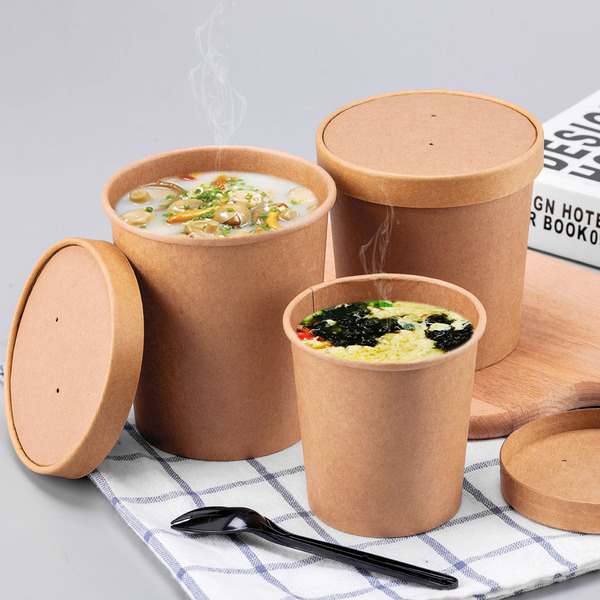
1. Kraft Paper Food Containers
These are among the most widely used solutions.
They offer:
•Good heat resistance
•Leakproof coating options
•Strong structure for delivery
Ideal for rice, pasta, and mixed dishes.
2. Paper Bowls with Lids
Perfect for:
•Soups and stews
•Noodles and ramen
•Saucy dishes
When paired with secure lids, they provide excellent leak resistance.
3. Foldable Takeaway Boxes (Clamshell)
Commonly used for:
•Fried foods
•Fast food meals
•Combo dishes
They are easy to stack and transport, with optional ventilation.
4. Bagasse (Sugarcane Fiber) Containers
A popular eco-friendly alternative, offering:
•High heat resistance
•Compostability
•Strong structure
However, they may have higher costs and limited customization compared to paper.
5. Aluminum Containers (Special Use)
Used for:
•Oven-ready meals
•High-temperature dishes
They provide excellent heat retention but are less eco-friendly and not suitable for all branding needs.
Common Mistakes to Avoid
Choosing the wrong packaging can lead to costly issues.
Avoid:
•Using non-ventilated containers for fried food
•Choosing low-quality materials that soften under heat
•Ignoring leakproof performance for sauces
•Overlooking sustainability regulations
Investing in the right packaging improves both efficiency and customer satisfaction.
What is the best packaging for keeping food hot during delivery?
Insulated paper containers, kraft bowls, and bagasse boxes are among the best options.
How do I prevent food from getting soggy?
Use ventilated packaging that allows steam to escape.
Is paper packaging suitable for hot food delivery?
Yes, high-quality paper packaging with proper coating is widely used and reliable.
What is the most eco-friendly option?
Compostable materials like bagasse and recyclable paper packaging are top choices.
Final Thoughts
The best packaging for hot food delivery is not just about holding food—it’s about preserving quality, preventing leaks, and enhancing the overall customer experience.
For most businesses in 2026, eco-friendly paper packaging stands out as the most practical and scalable solution.
Looking for Reliable Hot Food Packaging Solutions?
If you're sourcing takeaway packaging for the US or European market, choosing the right supplier is essential.
We offer:
•Heat-resistant, leakproof paper containers
•Eco-friendly and compliant materials
•Custom branding and printing options
•Bulk wholesale supply with consistent quality
Contact us to request samples or get a quote.
Recommended
Kai Lai Packaging Produce and sell environmentally friendly and reliable disposable paper food packaging products for global customers.