Produce and sell eco-friendly and reliable disposable paper food packaging products for global customers!
Language
Produce and sell eco-friendly and reliable disposable paper food packaging products for global customers!
Discover the real cost of eco-friendly food packaging and learn how to reduce expenses with bulk orders and smart sourcing.
As sustainability becomes a top priority, many businesses are switching to eco-friendly food packaging. However, one of the most common concerns remains: is eco-friendly food packaging more expensive than traditional packaging?
For restaurants, distributors, and food brands, packaging costs directly affect profit margins. Understanding the real cost of sustainable packaging is essential for making the right decision.
In this guide, we break down the actual costs, compare materials, and show how businesses can reduce expenses while transitioning to eco-friendly packaging.
Is Eco-Friendly Food Packaging More Expensive?
Quick Answer(Featured Snippet)
Yes, eco-friendly food packaging can be slightly more expensive than plastic, but bulk purchasing, improved branding, and regulatory benefits often make it more cost-effective in the long run.
Cost Comparison: Eco-Friendly vs Traditional Packaging
When comparing eco-friendly food packaging with traditional plastic packaging, the price difference typically depends on material, quantity, and customization.
Plastic packaging is usually cheaper due to large-scale production and long-established supply chains. However, its environmental impact and regulatory risks are increasing costs over time.
On the other hand, paper food packaging and compostable materials may have a higher upfront cost, but they offer long-term advantages.
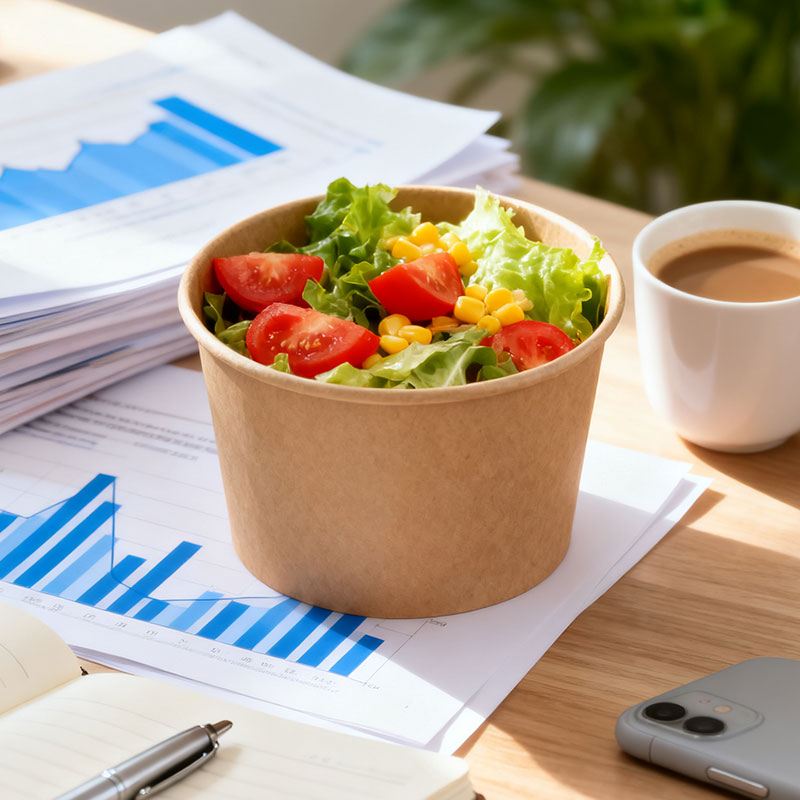
For example, kraft paper containers or biodegradable bowls may cost slightly more per unit, but they can improve brand perception and customer retention.
Key Factors That Affect Packaging Costs
The cost of eco-friendly food packaging is influenced by several important factors.
Material type plays a major role. Compostable materials such as PLA or bagasse are typically more expensive than standard paper options. Paper-based packaging is often the most cost-effective eco-friendly solution.
Order volume is another critical factor. Buying bulk food packaging significantly reduces per-unit cost, making sustainable options more affordable for growing businesses.
Customization also affects pricing. Custom food packaging with logos or unique designs may increase costs, but it adds strong branding value.
Shipping and logistics should also be considered, especially for international sourcing.
Why Many Businesses Still Choose Eco-Friendly Packaging
Despite the slightly higher upfront cost, more companies are choosing eco-friendly food packaging for strategic reasons.
First, it improves brand image. Consumers in the US and Europe are increasingly willing to support businesses that use sustainable packaging.
Second, it helps businesses comply with regulations. Many regions are introducing plastic bans, making sustainable packaging a safer long-term investment.
Third, it can increase customer loyalty and repeat purchases, which offsets the initial cost difference.
How to Reduce Eco-Friendly Packaging Costs
Switching to eco-friendly food packaging does not have to significantly increase your budget. There are several ways to control costs effectively.
Ordering in bulk is one of the most effective strategies. Many suppliers offer better pricing for large orders.
Choosing the right material is also important. Paper-based solutions are often more affordable than fully compostable materials.
Working with a reliable food packaging supplier can help you find cost-efficient options and avoid unnecessary expenses.
Hidden Costs of Cheap Packaging
While traditional plastic packaging may seem cheaper, it often comes with hidden costs.
Poor-quality packaging can lead to leakage, damaged food, and customer complaints. This can harm your brand reputation and increase operational costs.
In addition, regulatory risks associated with plastic packaging may result in future compliance costs or restrictions.
Choosing higher-quality eco-friendly food packaging can help avoid these issues and create long-term value.
Is Eco-Friendly Packaging Worth the Investment?
For most businesses, the answer is yes. While eco-friendly food packaging may have a slightly higher initial cost, the long-term benefits often outweigh the difference.
It supports sustainability goals, improves brand positioning, and helps businesses stay ahead of regulatory changes.
For growing brands, investing in sustainable packaging is not just a cost decision—it is a strategic move.
Is eco-friendly food packaging always more expensive?
Not always. Costs vary depending on materials and order volume. Bulk purchasing can significantly reduce prices.
What is the cheapest eco-friendly packaging option?
Paper food packaging is typically the most cost-effective sustainable option.
How can I reduce packaging costs for my business?
Order in bulk, choose the right materials, and work with a reliable supplier.
Conclusion
So, is eco-friendly food packaging more expensive? The answer is yes in some cases—but the difference is often small and can be offset by long-term benefits.
By choosing the right materials, optimizing order quantities, and working with an experienced food packaging supplier, businesses can successfully transition to sustainable packaging without significantly increasing costs.
Looking for cost-effective eco-friendly food packaging?
We provide high-quality, customizable, and competitively priced food packaging solutions for global businesses. Whether you need bulk food packaging or custom food packaging, we can help you reduce costs while upgrading sustainability.
Contact us to:
•Request free samples
•Get bulk pricing
•Explore custom packaging solutions
Kai Lai Packaging Produce and sell environmentally friendly and reliable disposable paper food packaging products for global customers.