Produce and sell eco-friendly and reliable disposable paper food packaging products for global customers!
Language
Produce and sell eco-friendly and reliable disposable paper food packaging products for global customers!
Sustainability has become a major priority in the food packaging industry. Across the US and Europe, businesses are moving away from plastic and exploring alternatives like biodegradable packaging.
But here’s the critical question:
Is biodegradable packaging really better—or is it just marketing?
While biodegradable materials offer clear environmental advantages, they also come with limitations that many businesses overlook.
In this guide, we take an honest, practical look at biodegradable packaging—what it does well, where it falls short, and whether it’s the right choice for your business.
Quick Answer: Is Biodegradable Packaging Better?
Biodegradable packaging is better for the environment in many cases—but not always.
It depends on:
•How it is disposed of
•Whether proper composting facilities are available
•The type of food application
•Cost and performance requirements
For many businesses, the best solution is not “all biodegradable,” but a balanced packaging strategy.
What Is Biodegradable Packaging?
Biodegradable packaging refers to materials that can break down naturally into water, carbon dioxide, and organic matter over time.
Common types include:
•PLA (plant-based bioplastic)
•Bagasse (sugarcane fiber)
•Paper-based materials with eco-friendly coatings
However, not all biodegradable packaging breaks down under the same conditions.
The Key Benefits of Biodegradable Packaging
1. Reduced Environmental Impact
Compared to traditional plastics, biodegradable materials:
•Reduce long-term pollution
•Break down faster under the right conditions
•Lower dependence on fossil fuels
2. Strong Sustainability Branding
Using biodegradable packaging helps businesses:
•Appeal to eco-conscious consumers
•Strengthen brand image
•Meet retailer sustainability requirements
In many markets, this directly influences purchasing decisions.
3. Regulatory Compliance (US & EU)
Governments are increasingly restricting single-use plastics.
Biodegradable packaging helps businesses:
•Stay compliant with evolving regulations
•Avoid potential penalties or bans
•Future-proof their operations
The Hidden Limitations You Should Know
1. Requires Proper Disposal Conditions
Many biodegradable materials (especially PLA) only break down in:
•Industrial composting facilities
If disposed of in regular landfill:
•They may not degrade effectively
•Environmental benefits are reduced
2. Higher Cost
Compared to traditional plastic or PE-coated paper:
•Biodegradable packaging is often more expensive
•Costs can impact margins for high-volume businesses
3. Performance Trade-Offs
Some biodegradable materials may have:
•Lower heat resistance
•Reduced durability for liquids
•Shorter usable time for hot food
This can affect food quality during delivery.
4. Consumer Confusion
Many consumers misunderstand terms like:
•Biodegradable
•Compostable
•Recyclable
Incorrect disposal reduces the intended environmental benefits.
When Biodegradable Packaging Makes Sense
It is a great choice if you:
•Target eco-conscious or premium markets
•Operate in regions with composting infrastructure
•Want strong sustainability positioning
•Serve foods that don’t require extreme heat resistance
When It May NOT Be the Best Option
It may not be ideal if you:
•Need high durability for hot liquids
•Operate at large scale with tight cost control
•Sell in markets without composting facilities
•Require long delivery times
A Smarter Approach: Hybrid Packaging Strategy
Many successful businesses use a combination of materials:
•Recyclable paper packaging for general use
•Biodegradable options for eco-focused products
•High-performance coatings (PE or alternatives) for demanding applications
This approach balances:
•Cost
•Performance
•Sustainability
New innovations such as water-based coatings are also helping reduce plastic use in packaging.
Is biodegradable packaging always eco-friendly?
Not always. Its impact depends heavily on disposal conditions and infrastructure.
Is compostable the same as biodegradable?
No. Compostable materials require specific conditions, while biodegradable is a broader term.
Why is biodegradable packaging more expensive?
It involves higher raw material and production costs.
What is the best alternative to plastic packaging?
Recyclable paper packaging and compostable materials are among the best options, depending on use case.
Final Thoughts
Biodegradable packaging is a step in the right direction—but it’s not a perfect solution.
For most businesses, the key is not choosing one material over another, but building a practical, balanced packaging strategy that aligns with performance needs, cost, and sustainability goals.
Looking for the Right Eco-Friendly Packaging Solution?
If you're sourcing packaging for the US or European market, choosing the right material mix is critical.
We offer:
•Biodegradable, recyclable, and coated paper packaging
•Food-grade certified materials
•Custom branding and flexible solutions
•Bulk wholesale supply with stable quality
Contact us tto discuss the best packaging strategy for your business.
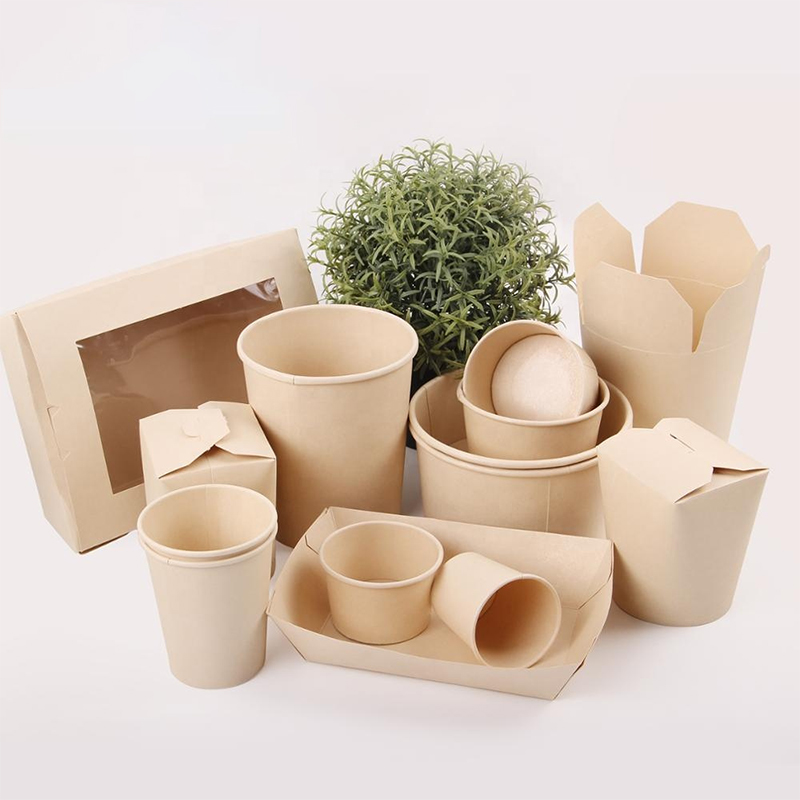
Kai Lai Packaging Produce and sell environmentally friendly and reliable disposable paper food packaging products for global customers.